The Sticky Spoon Ritual: A Love Letter to the Chai-Making Grandparent in Every Family
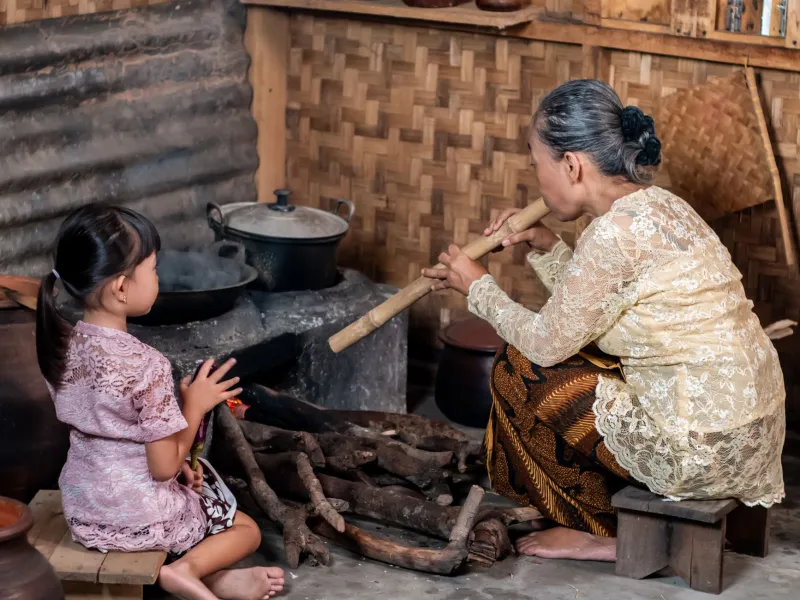
There's a spoon in my grandmother's kitchen drawer that has never been clean. Not dirty, exactly — just permanently amber at the edges, stained by decades of being dipped into boiling jaggery syrup and pulled out for a taste. She'd wave it at you, sticky and gleaming, as if to say this is the actual measuring instrument, forget the cups.
Every family seems to have someone like this. Maybe it's your dad, standing at the stove at 6 a.m. before anyone else is awake, crushing cardamom under the flat of a knife. Maybe it's an aunt who judges your simmer by sound alone. In American households — whether the chai tradition arrived two generations ago in Queens or was adopted last winter in Portland — that person is the keeper of the recipe.
And here's the thing nobody wants to say out loud: they won't be around forever, and neither will the recipe.
The Recipe That Lives in Their Wrists
Ask a chai elder for their recipe and you'll get answers like "some ginger" or "boil it until it looks right." That's not evasiveness — that's genuinely how they know it. Their hands have memorized what their brains never wrote down.
This is why the interview matters more than the recipe. When my grandmother finally let me shadow her, I learned things no written recipe would ever capture:
- She toasts the fennel seeds dry for thirty seconds before anything else hits the pot. "Wakes them up," she says.
- She adds the tea leaves after the first boil, not before, and counts to forty in her native language rather than watching a timer.
- The milk goes in when the ginger smell "turns from sharp to round." I've been chasing that description for three years.
- She pours the finished chai between two cups from a height — not for show, she insists, but for the foam.
None of these steps appear on any spice tin. They live in her wrists, and the only way they transfer to mine is through repetition at her elbow.
How to Interview Your Family Chai-Maker (Before It's Too Late)
If you're heading home for the holidays, or they're visiting you, treat it like the oral history project it is. A few tips that made my session actually useful:
Record video, not just notes. Prop your phone against the sugar canister and let it run. The exact moment they add the tea, the color of the boil, the way they tilt the pot — video catches what words can't. Ask them to narrate as they go, even if they feel silly doing it.
Ask about the past, not just the pot. The best answers came from questions like "Who taught you this?" and "What did you use when you couldn't get cardamom?" My grandmother's story about substituting allspice in 1970s Michigan because no local store sold green cardamom? That's family history no cookbook holds.
Get the specifics by playing dumb. "How much is some ginger? Show me on this spoon." Have them measure into your hand so you can feel the quantity. Weigh it later if you can — a kitchen scale turns "some" into 12 grams.
Ask what they'd never do. Family chai recipes are defined as much by their taboos as their steps. No honey. Never boil the leaves twice. Whatever the rule is, write it down — it's the guardrail that keeps your recreation honest.
The Family Chai Recipe Card
To make this easier, we've put together a printable template — what we call the Family Chai Recipe Card. It's designed to be filled out with your chai elder, ideally in the kitchen, ideally while the kettle's on.
The card includes fields for:
- The essentials: tea, spice, sweetener, and milk quantities (with a blank line for "the secret extra")
- The sequence: numbered steps with space for sensory cues like "until it looks like ___"
- The origin story: who taught them, where they first drank it, what year
- The never list: the one thing you must never do
- A signature line — because a recipe signed by the person who made it yours deserves to be treated like the heirloom it is
Print it on cardstock, fill it out together, and stick it in a page protector on the fridge. Ours hangs next to my grandmother's actual handwriting on the back, where she corrected my measurements in pencil.
Then Make It Your Job
Here's the last part, and it's the one that matters: a recorded recipe that sits in a drawer is just a document. The ritual only survives if someone keeps making the chai.
So brew it weekly. Burn the first pot. Over-steep the second. Somewhere around pot five, your hands will start to remember what your notebook says, and one day you'll pour from a height without thinking about it and realize the sticky spoon has been passed.
When that day comes, make a cup for whoever taught you — and if they're no longer around to drink it, make it anyway. Steam rises. Kitchens remember. That's the whole point of the ritual.