Skip the Fancy Gear: Your First Chai Setup Costs Less Than a Week of Café Runs
There's a moment every new chai brewer hits: you've tasted the real thing—or at least a really good café version—and you're ready to make it at home. Then you search "chai starter kit" and find yourself staring at hammered-copper kettles, temperature-controlled smart kettles, and spice grinders that cost more than your last grocery run.
Breathe. Chai was born on street corners and in home kitchens, not in showrooms. The whole point of the drink is that it's humble: tea, spice, milk, sugar, heat. Your gear should reflect that. Here's how to build a complete setup for $25—and where it's actually worth spending more later.
The $25 Setup, Line by Line
A basic saucepan — $10. This is the non-negotiable heart of chai. You need a small pot to boil tea, spices, milk, and water together. Any 1.5 to 2-quart saucepan works; hit a thrift store or a big-box store's house brand and you'll spend under $12. Stainless steel is easiest to clean, especially once milk sugars start caramelizing at the bottom.
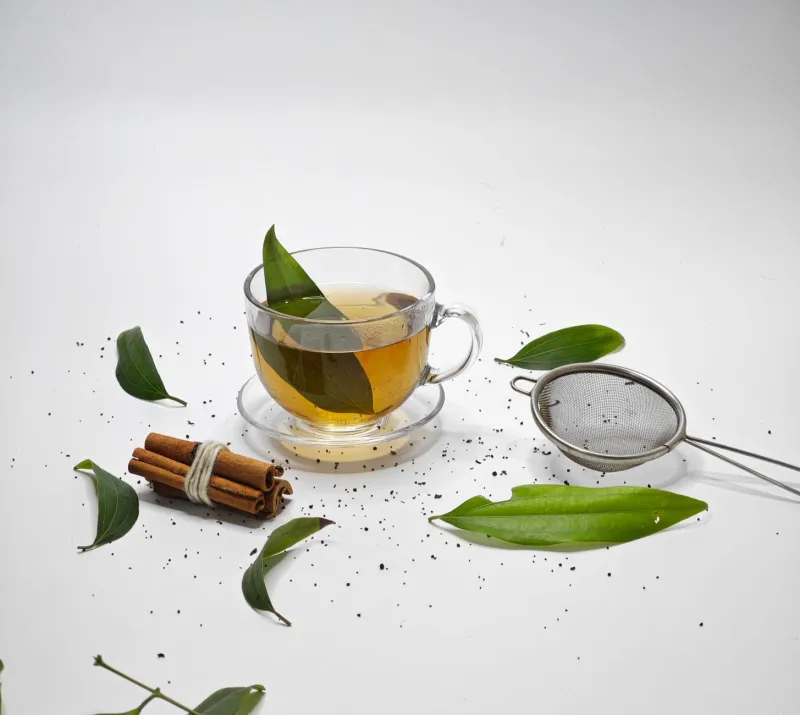
A fine-mesh strainer — $5. You'll be pouring through this to catch whole spices and tea leaves. A simple 3-inch mesh strainer from any grocery or dollar store does the job perfectly. No need for a dedicated "chai strainer" with a branded handle.
A small spice starter pack — $8 to $10. Buy whole spices from the bulk bins or international aisle: a few cardamom pods, a cinnamon stick, a couple of cloves, and a knob of fresh ginger from the produce section. Whole spices last longer and taste brighter than anything pre-ground. Many US grocery stores with South Asian sections—Patel Brothers, HMart, even some Walmart locations—sell small packets for a couple of dollars each.
Loose black tea — $3 to $5. Assam or any strong CTC-style tea. You need strength to stand up to milk and spice. One small pouch will make twenty or more cups.
Total: about $25. That's it. That's the kit. It makes genuinely good chai starting today.
The Gimmicks Worth Ignoring
The chai gear market has discovered Americans, and the results are predictable. Here's what to pass on:
- Electric chai makers ($50–$150). These automate a process that takes fifteen minutes and benefits from your attention. Chai rewards watching—the moment the milk rises twice, the way the color deepens. A machine removes the skill you're trying to build.
- Copper kettles ($60+). Gorgeous on a shelf, unnecessary on a stove. Traditional, yes, but tradition doesn't improve extraction.
- Pre-made "chai spice" grinders and blends ($15+). You're paying a markup for spices you can buy whole for a third of the price, and pre-ground blends go stale fast.
- Specialty frothers ($30+). Chai isn't a latte. The foam comes naturally from a rolling boil and a good pour. Save the frother for your coffee habit.
Where a Splurge Actually Makes Sense
Once you're hooked—and you will be—here's the upgrade path worth taking:
- A gooseneck or pour-over kettle ($30–$60): Nice, but honestly optional for chai. Only bother if you also brew other teas.
- Better tea ($15–$25 per tin): This is where your money should go first. A quality loose Assam or a Darjeeling-Assam blend transforms the cup more than any gadget ever will.
- Fresh whole spices in quantity ($20–$30): Buying green cardamom from a spice shop or a well-stocked international grocer is a revelation. Cardamom is the most expensive spice in the blend, and stale cardamom is the number one reason home chai tastes flat.
The Honest Verdict
Start with the $25 kit. Brew a dozen cups. Learn the boil, the spice ratios, the sugar moment. When you can taste exactly what's missing from your cup, then spend money—on better leaves and fresher spices, not on machines that do the watching for you.
Chai rewards patience and punishes shortcuts. Your wallet will appreciate that the same goes for the gear.