Dust, BOP, or Whole Leaf? What Your Tea Grade Means for the Pot You Brew Tonight
Walk down the tea aisle at any Indian grocery in New Jersey or Texas and you'll spot words like CTC, BOP, and 'whole leaf' printed on nearly every black tea package. Most American shoppers breeze past them. But if you're serious about masala chai at home, those little labels are the difference between a cup that tastes like the one from your favorite chaiwala and a cup that tastes like sad hotel tea.
So we did what we do best: we pulled out three tins of Assam — a dusty CTC, a broken-leaf grade, and a full whole-leaf — and brewed them back to back with the same spice blend, the same milk, and the same sugar. Here's what we learned.
First, a Quick Primer on Leaf Grades
Black tea isn't just 'tea.' After the leaves are plucked and processed, they're sorted by size and style, and that sorting dramatically changes how the tea behaves in your pot.
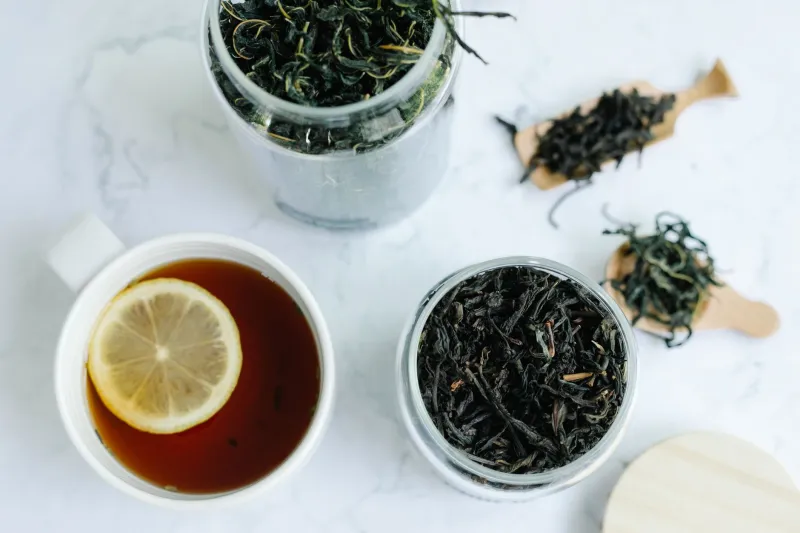
- CTC (Crush, Tear, Curl): Leaves run through rollers that shred them into tiny, uniform pellets. It brews fast, dark, and punchy — the workhorse of Indian chai stalls.
- Broken leaf (BOP and friends): Exactly what it sounds like. Smaller pieces than whole leaf, but still recognizable. A middle ground in both flavor and speed.
- Whole leaf: Intact, often hand-rolled leaves. Slower to brew, but the flavor is more layered and nuanced.
Think of it like coffee: CTC is espresso, whole leaf is pour-over. Neither is 'better' — they're built for different jobs.
Why Street Chai in India Runs on CTC
There's a reason the tapri guy in Mumbai doesn't brew first-flush Darjeeling. CTC is practically engineered for chai. Those crushed pellets release color and tannin fast, standing up to a hard boil, a splash of milk, and a fistful of ginger without flinching.
In our side-by-side, the CTC batch came out of a five-minute boil with a deep mahogany color and that malty, almost cocoa-like backbone you recognize from chai stalls. The milk turned a warm caramel brown. It tasted like chai — the platonic version.
If your chai routine involves boiling everything together — tea, spice, milk, sugar — CTC is almost certainly your leaf. It doesn't get bitter or astringent the way delicate leaves do when abused.
Where Whole Leaf Shines (and Where It Doesn't)
The whole-leaf Assam told a different story. Boiled for five minutes with milk? It went flat and slightly bitter — the tannins turned harsh, and the subtle floral-malty notes we could smell in the dry leaf vanished into the pot.
But brewed gently — a four-minute steep in hot water before adding warm milk and a light spice touch — the whole leaf was a revelation. Honeyed malt, a whisper of cocoa, a smooth finish. No dust, no bite.
The takeaway: whole leaf rewards a lighter hand. If you like your chai milk-forward and strong, stick with CTC. If you're the type who sips Darjeeling in the afternoon and wants a chai with more finesse than muscle, whole leaf is your friend.
Broken leaf, predictably, split the difference. It held up to a two-minute simmer with milk and still kept some character. If you can only keep one tin in the pantry, a good broken-leaf Assam is the versatile pick.
How to Choose Based on Your Chai Style
Here's the cheat sheet we wish someone had handed us years ago:
| Your style | Best grade | Why |
|---|---|---|
| Full boil, lots of milk and spice | CTC | Fast extraction, strong tannins, classic stall flavor |
| Gentle steep, light milk | Whole leaf | Nuanced flavor survives low heat |
| Somewhere in between | Broken leaf | Flexible, forgiving, still flavorful |
A few practical notes for shopping stateside:
- 'Chai-grade' or 'CTC Assam' on a label is a green flag for boiled chai.
- 'Orthodox whole leaf' or 'OP' signals the slower, gentler approach.
- Loose leaf beats tea bags for chai every time — bagged tea is usually the finest dust of all, and it turns bitter fast under a boil.
The Verdict
There's no single 'best' tea for chai — there's the best tea for your chai. Match the grade to the method: CTC for the full-rolling-boil, milk-and-sugar street style; whole leaf for a softer, more contemplative cup. Broken leaf covers the middle ground.
The next time you're restocking your shelf, grab all three if you can. A side-by-side taste test at your own table is the best tea education money can buy — and it costs less than a week of café lattes.